EZO Bearing Series Part I: Technical Advantages
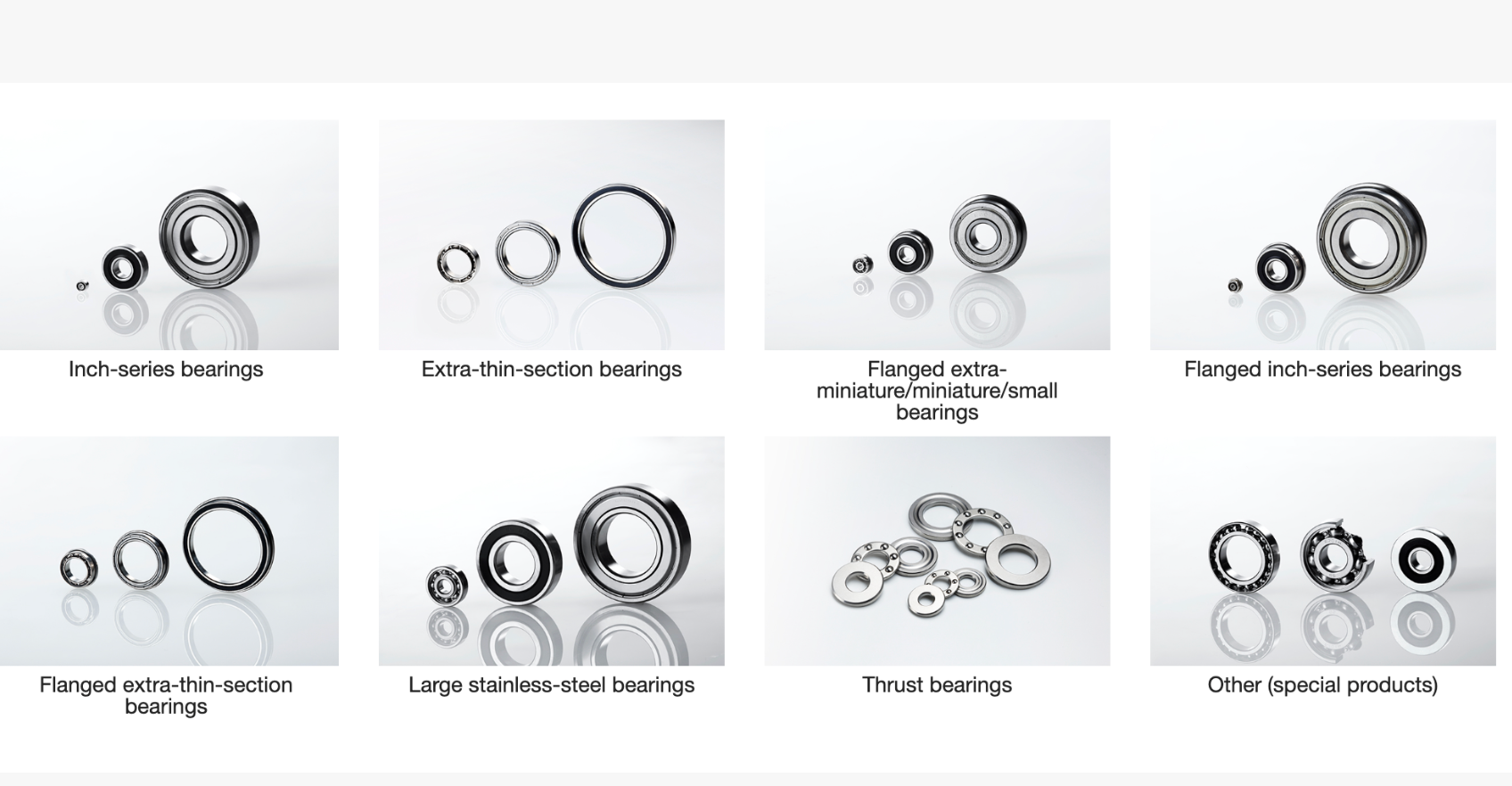
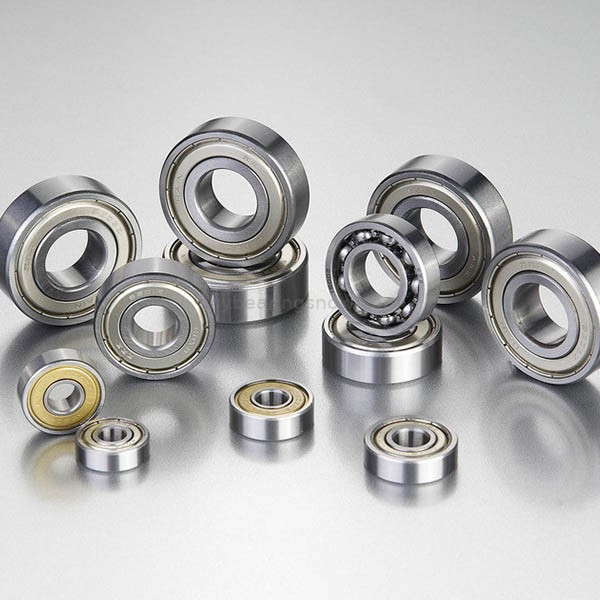
Within the landscape of Japanese precision machinery, EZO (a subsidiary of SAPPORO PRECISION Co., Ltd.) occupies a distinctive niche. Established in 1944, the company has eschewed the pursuit of sheer manufacturing volume to focus its engineering acumen entirely on the dimensions of "micro" and "precision." Spanning from miniature bearings with inner diameters of merely 0.6mm to complex flanged structures, EZO’s technical philosophy underscores a fundamental truth in high-end transmission: the performance ceiling of sophisticated equipment is rarely defined by motor power, but rather by the few grams of bearing supporting the rotation.
Precision Control at Dimensional Limits
EZO’s most defining characteristic is its dominance in the realm of extra-small and thin-section bearings. In applications such as semiconductor manufacturing or medical diagnostic instruments, spatial constraints are often measured in mere millimeters. Through the optimization of raceway geometry and cage design, EZO engineers have successfully pushed bearing inner diameters down to the micron level while maintaining exceptional rotational accuracy.
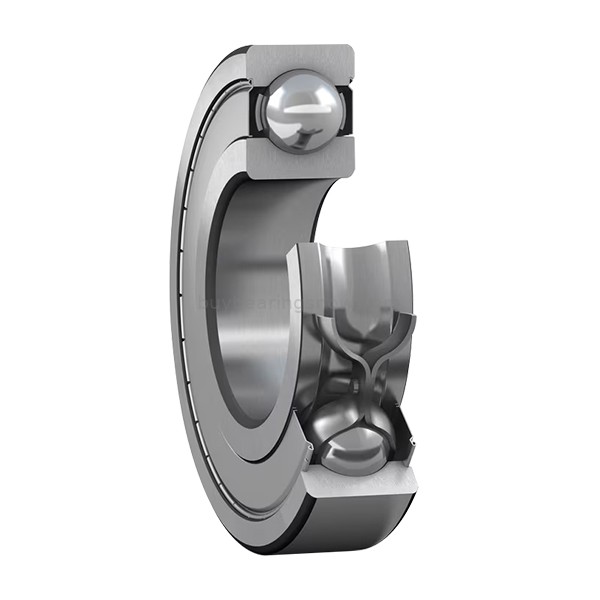
This extreme miniaturization is not a simple scaling exercise; it requires a delicate recalibration of rigidity versus frictional torque. Take EZO’s 6700, 6800, and 6900 series thin-section bearings as examples. These components achieve high load capacities within incredibly slim cross-sections, facilitating hollow shaft designs that preserve vital internal space for wiring or fluid transport. In robotic joints or optical imaging systems, this lightweight, low-torque architecture translates directly into more agile dynamic responses and reduced energy consumption.
Materials Science and Environmental Resilience
Beyond the refinement of geometric precision, EZO possesses profound expertise in metallurgy. Confronting harsh operating environments—such as food processing, medical devices, or marine equipment—where standard carbon steel bearings frequently succumb to corrosion, EZO deploys high-grade 440 stainless steel or proprietary rust-resistant alloys, integrated with specialized heat treatment processes.
This investment in materials science yields two immediate operational advantages: corrosion resistance and low noise. In practical scenarios, such as automation line upgrades in precision instrument facilities, replacing traditional bearings with EZO’s stainless steel miniature variants (e.g., the SMR85ZZ series) has been shown to significantly reduce failure rates in humid conditions. This reliability stems from the fact that EZO bearings not only resist chemical degradation but also utilize specially treated surface finishes that minimize lubricant evaporation and migration. This ensures the bearings retain their smooth tactile performance after thousands of hours of operation, preventing vibration artifacts caused by dry friction.
Clean Manufacturing and Consistency
For high-precision instrumentation, even microscopic particulate matter within a bearing can be catastrophic. Recognizing this, EZO has established ultra-high standard clean assembly environments at its Ashibetsu factory. Prior to grease packing, all inner and outer rings and balls undergo rigorous pure water ultrasonic cleaning to eliminate micron-level dust.
This近乎 obsessive manufacturing discipline is tangibly reflected in the product's acoustic performance. Equipped with advanced sound inspection machines, EZO can detect infinitesimal acoustic anomalies, guaranteeing that every bearing leaving the factory—whether destined for the slow-speed motors of dental chairs or high-speed centrifuges—delivers a predictable and stable coefficient of friction. It is this unwavering commitment to consistency that cements EZO’s status as the preferred solution for OEMs navigating complex operating conditions, proving that in the micro-world, Japanese manufacturing rigor remains the definitive synonym for quality.